
The Pinnacle of Modern Aesthetics: High-Quality Wardrobe Model Design Process
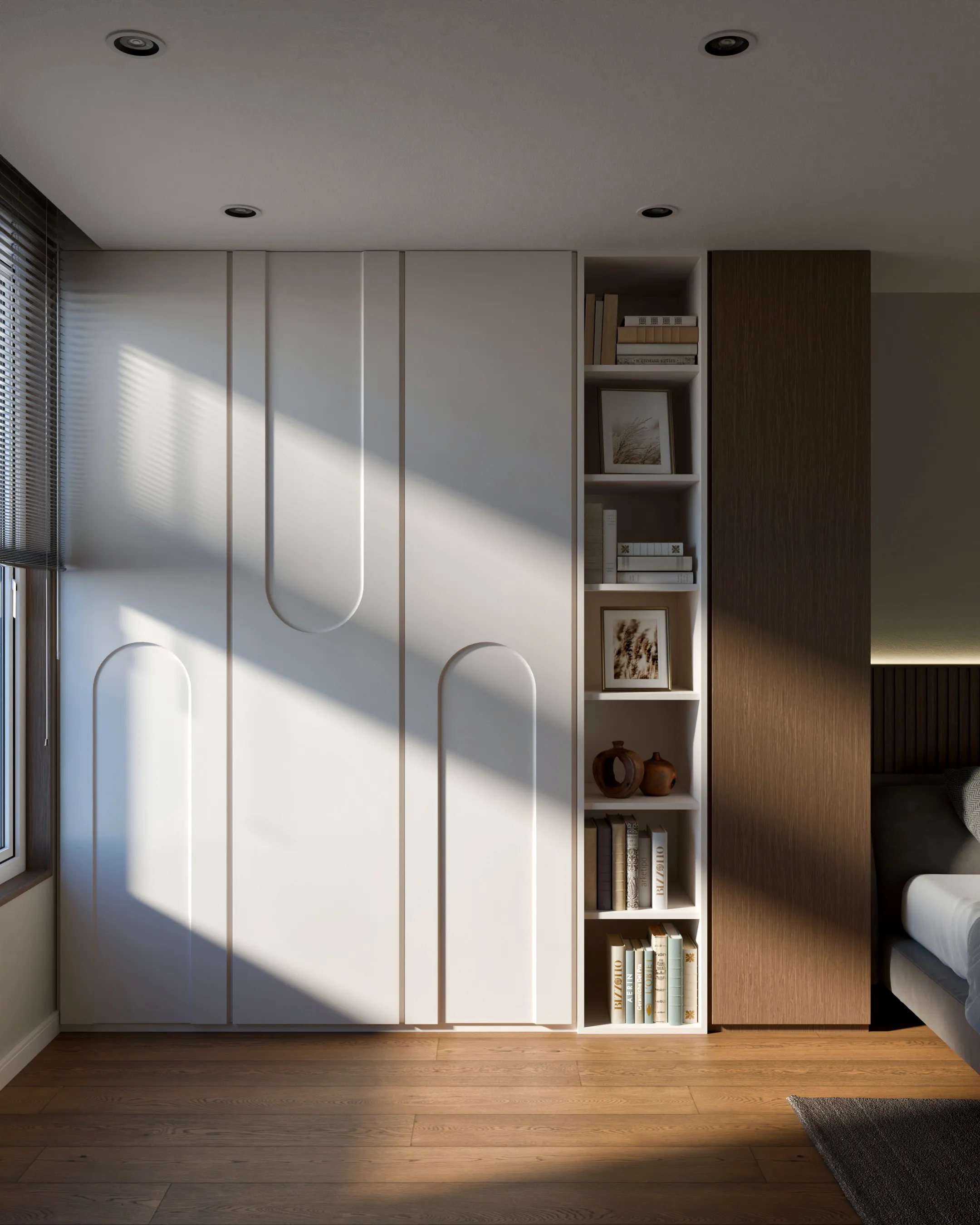
A captivating morning sun filters through the blinds, highlighting the elegant arched details on the white panels. This high-quality wardrobe model seen in the image is not just a storage unit, but an artistic touch that transforms the soul of the interior. Behind this design, where modern minimalism blends with classic lines, lies a meticulous digital production process.
In this article, we will examine the stages of a professional furniture modeling process that turns dreams into reality and the technical details used.
1. Design Concept and Modeling with Blender
Every successful project is built on correct planning. For this modern wardrobe design, the geometry of the space and the light angle were first analyzed. The skeleton of the project was created using Blender, one of the world's most powerful open-source software.
- Geometric Precision: The arched forms on the wardrobe doors were modeled with high polygon quality without disrupting the surface flow.
- Functional Details: Open shelf systems and wooden sections were placed adhering to real-world dimensions.
- Modular Structure: Each piece was optimized individually to increase the flexibility of the design.
2. Realistic Texturing and Material Selection
The most important factor determining the quality of a model is how it reacts to light. In this project, high-resolution textures were preferred to achieve photorealistic render results.
- Matte White Surfaces: Matte lacquered surfaces that softly diffuse light increase the spaciousness of the room.
- Natural Wood Texture: The dark wood texture used in the right block was prepared in the digital environment using PBR material (Physically Based Rendering) techniques. In this way, the grains and reflection values of the wood appear just like in real life.
3. The Art of Light and Shadow with Cycles Render Engine
After modeling and texturing were completed, the rendering process, the stage that brings the scene to life, began. In this stage, Blender's physically-based Cycles render engine was used.
The main reasons for choosing Cycles are:
- Light Bounces: Sunlight bouncing off the floor and walls and seeping into the wardrobe creates a realistic atmosphere.
- Soft Shadows: The sharp but naturally transitioning shadows created by the light filtering through the blinds strengthen the perception of depth.
- Detail Clarity: Small details such as books, decorative objects, and wood fibers are processed with the highest clarity thanks to this engine.
Conclusion: Aesthetics and Quality Together
A professional interior design is a combination of the right tools and an artistic perspective. This high-quality wardrobe model, brought to life with the flexibility of Blender and the power of Cycles, offers both a stylish and inspiring solution for modern living spaces. If you want to make a difference in your spaces, you can take advantage of these limitless possibilities offered by digital design.